Circular Electronics (P4)
tu/e contest;
business model;
combatting e-waste;
right to repair;
tu/e contest; business model; combatting e-waste; right to repair;
Modular speaker platform designed for repairability to combat the growing e-waste problem.
Competencies
Multidisciplinary Problem Solving; Storytelling; Circular Economy.
Expertise Areas
Creativity and Aesthetics (CA)
User and Society (US)
Technology and Realization (TR)
Business and Entrepreneurship (BE)
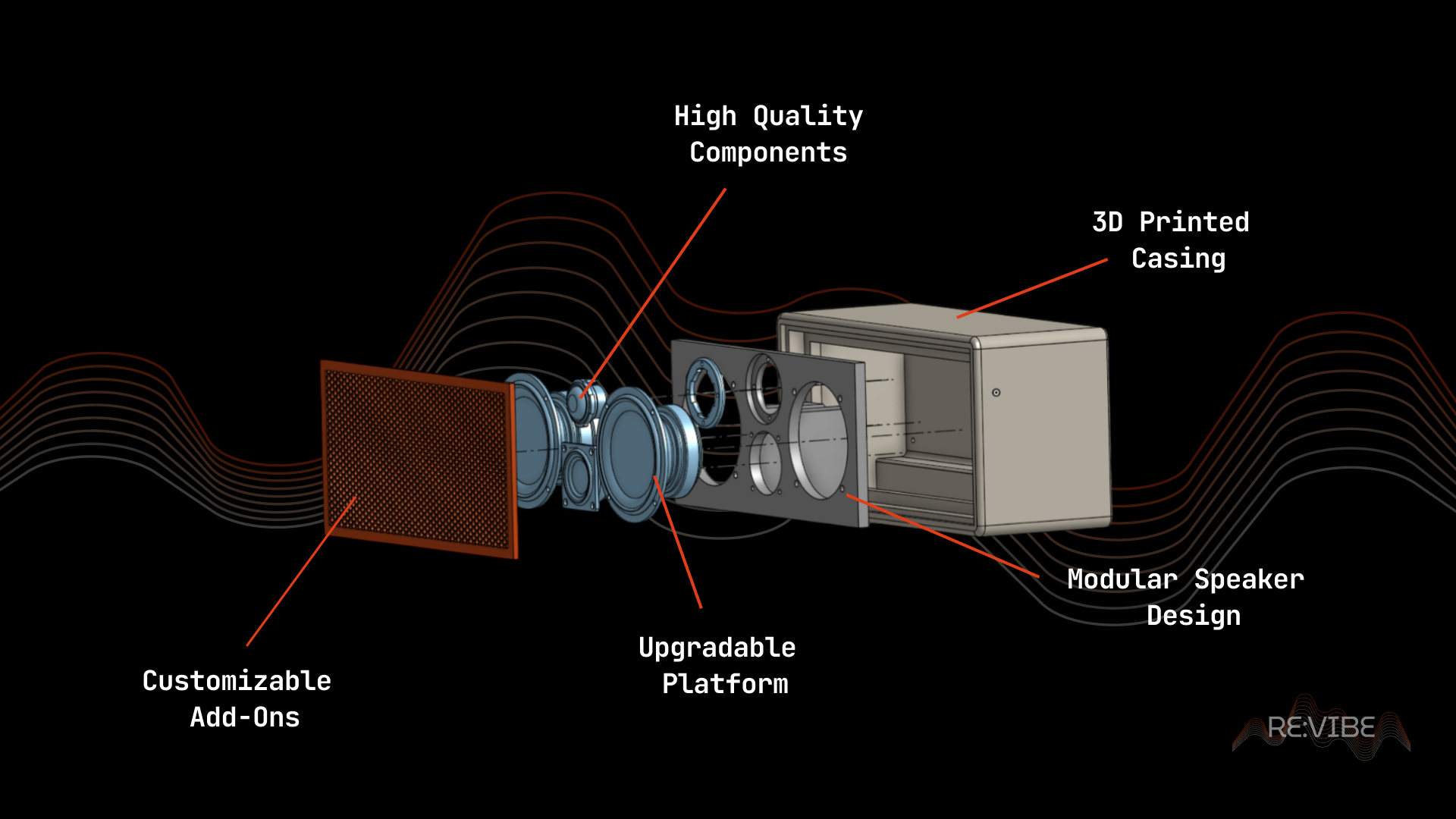
RE:VIBE is a project focused on developing a modular speaker platform, designed for repairability [TR,US]. We introduced it, as an alternative consumer product to the current audio market options, with a goal of addressing the growing problem of e-waste [BE,US].
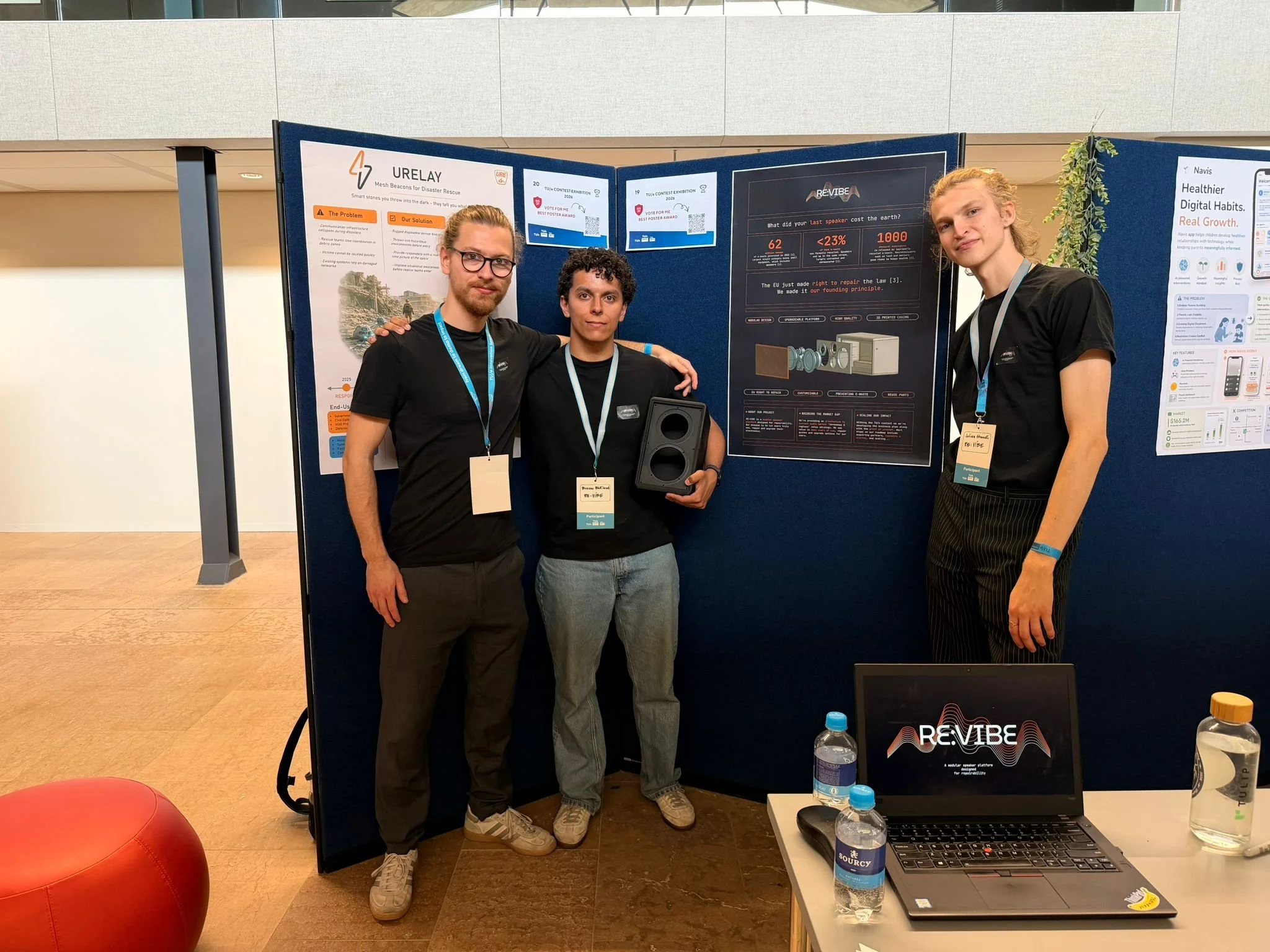
It originated from multidisciplinary problem solving within the Multidisciplinary CBL's Circular Electronics track. The project, although originally expected to stay within the scope defined by a quartile-long course, was pursued further by our team of students from different faculties. We have also participated in the TU/e contest to raise awareness, gain visibility, and scale up our idea with a mission of redefining the current audio industry standards.
This experience has taught me a valuable lesson, highlighting the importance of storytelling and adjusting the project pitch depending on the audience [BE, CA]. How the project is presented could highly impact its perceived value, which is especially relevant for involvement of multidisciplinary stakeholders.
For example, a business owner, or a sales leader might be critically looking at value proposition and predictions of profit, whereas a design researcher might be more interested in methodology applied and emergent knowledge.
RE:VIBE has continued beyond the TU/e contest, and now it's in the process of potentially becoming a student team, to make our insights accessible to be built upon by future generations of students.